6 full lessons
Written in plain language, illustrated, and kept as a reference afterward.
In the kitchen · cooking with seaweed
Buying, rinsing, rehydrating, seasoning, preserving, and cooking seaweed as an ingredient rather than a novelty, with Jules's own recipes at the center.
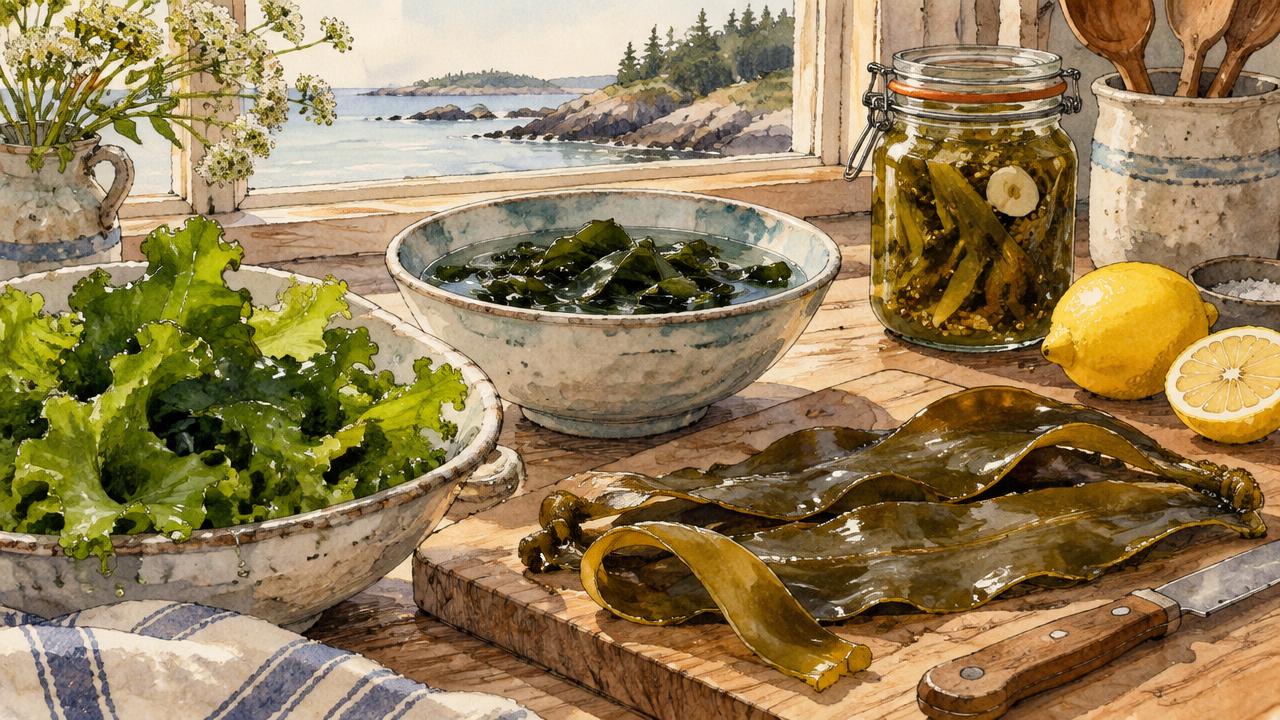
Six lessons on cooking seaweed well: what to buy and how to store it, rinsing, rehydrating, and blanching with real times, how salt and umami behave when seaweed is doing the seasoning, Jules's own recipes in her words, preserving with pickles, salts, and flakes, and how to serve it to somebody who thinks they will not like it.
$95 once, or $95 on Driftline. Add $60 and Jules reads and grades one real piece of work, passing at 80 percent. Review is optional. Nothing here is accredited or carries credit.
Pay once, and it is yours to come back to. Pick how you want to take it.
On your own
The whole class, the practice work, and the knowledge checks. No pass score, no graded work, no certificate gate.
With Jules reading your work
Everything above, plus one real piece of work, "One seaweed dish, written so someone else could cook it", that Jules reads and grades against a rubric you can see before you start. You pass at 80 percent, and you can rewrite and send it back as many times as you need. This is optional, and it is not accredited and carries no continuing education credit.
Already taking this class? You can add review later and pay only the $60 difference.
Written in plain language, illustrated, and kept as a reference afterward.
Measured per lesson, with written outcomes, so your time is recorded honestly.
Clear answers and explanations, unlimited tries, and nothing sent to a gradebook.
Rules are shown by state with the source and the date we checked it.

Lesson 1 · 1.5 h

Lesson 2 · 2 h
Lesson 3 · 2 h
Lesson 4 · 3 h

Lesson 5 · 2 h
Lesson 6 · 1.5 h
We say plainly how well each part of the country is covered, rather than implying the whole country is written to the same depth.
The federal Food Code is the model most states adopt for retail and food service. It carries the cooking temperatures, the cooling times, and the holding rules that apply the moment you cook for other people. Your state's adopted version is the one that binds you.
FDA Food Code · checked 2026-09-19Refrigerator pickles are simple and safe when kept cold and eaten within a few weeks. Shelf-stable canning is a different thing entirely, and low-acid foods need a tested process. Use published, tested processes rather than adapting one.
USDA Complete Guide to Home Canning · checked 2026-09-19The UConn seaweed program publishes free cooking material for US farmed seaweeds, including preparation basics for sugar kelp and other species. It is a good, free starting point for anyone building a seaweed menu.
UConn Seaweed Hub · checked 2026-09-19Everyone gets the same lessons, practice work, and knowledge checks. For $60 more you also get one real assignment that Jules reads and grades. You can see exactly how it is judged before you start, you pass at 80 percent, and you can rewrite and send it back as many times as you need. This is optional, and it is still not accredited and carries no continuing education credit.
The assignment
Cook one dish using a seaweed you can actually buy or harvest where you live, then write it up honestly.
Choose one seaweed available where you live. Cook one dish with it, then write the dish up so another cook could repeat it: the species and where it came from, how you rinsed, soaked, or blanched it and for how long, the seasoning decisions and why, and what you would change next time. Say plainly what went wrong the first time if anything did. Name your source for any food-safety step, such as drying, salting, or pickling.
How it is graded
The seaweed is identified and sourced · 25 points
The species is named, and where it came from is stated, including whether it was bought or harvested.
Preparation is specific enough to repeat · 25 points
Soaking, rinsing, or blanching times and ratios are written down, not described vaguely.
Seasoning judgment is explained · 25 points
You say why the dish is balanced the way it is, in terms of salt, acid, fat, and the seaweed's own flavor.
Safety steps are cited · 25 points
Any drying, salting, pickling, or storage step points to published guidance you name.
100 points in total. You pass at 80. Jules grades what you worked out, not your formatting or your word count.
Take the safety and handling class first if you cook for other people. If you want to harvest your own, Responsible Wild Harvest covers seasons, limits, and permission.
This course does not carry accreditation, credit, or continuing education units, and completing it does not count toward any outside credential. It is written to the structure a continuing education standard expects, with measured hours, written outcomes, and a completion record you can keep.