
6 full lessons
Written in plain language, illustrated, and kept as a reference afterward.
Working skills · the part that takes the longest
Who decides what, in what order, and how a normal person takes part: the agencies, the reviews, the hearings, and the file you keep the whole way through.
Six lessons on getting permission: which agency decides what, the federal layer and where it applies, the state and local layer that usually decides your timeline, reading a site honestly before you spend money on an application, taking part in a public process without dreading it, and keeping the file that lets you answer a question five years later.
$125 once, or $125 on Driftline. Add $60 and Jules reads and grades one real piece of work, passing at 80 percent. Review is optional. Nothing here is accredited or carries credit.
Pay once, and it is yours to come back to. Pick how you want to take it.
On your own
The whole class, the practice work, and the knowledge checks. No pass score, no graded work, no certificate gate.
With Jules reading your work
Everything above, plus one real piece of work, "A permitting path, in order", that Jules reads and grades against a rubric you can see before you start. You pass at 80 percent, and you can rewrite and send it back as many times as you need. This is optional, and it is not accredited and carries no continuing education credit.
Already taking this class? You can add review later and pay only the $60 difference.
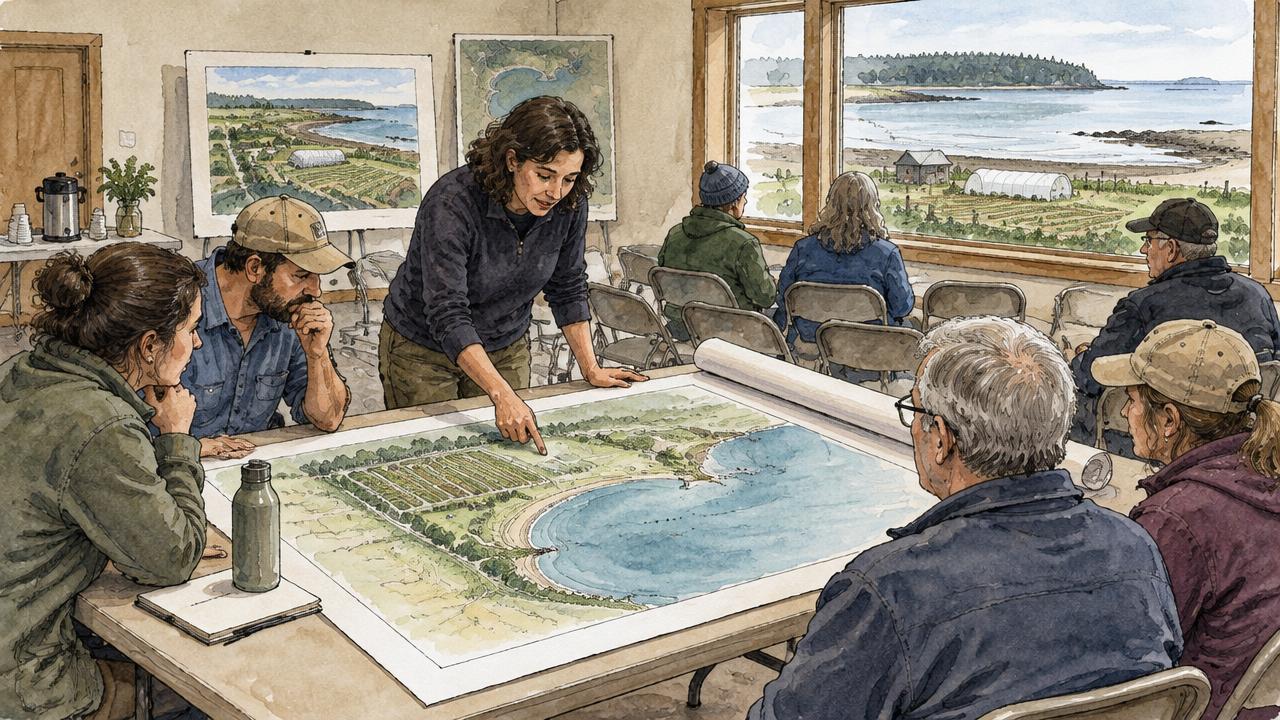
Written in plain language, illustrated, and kept as a reference afterward.
Measured per lesson, with written outcomes, so your time is recorded honestly.
Clear answers and explanations, unlimited tries, and nothing sent to a gradebook.
Rules are shown by state with the source and the date we checked it.

Lesson 1 · 2 h

Lesson 2 · 2 h

Lesson 3 · 2 h

Lesson 4 · 2 h

Lesson 5 · 2 h
Lesson 6 · 2 h
We say plainly how well each part of the country is covered, rather than implying the whole country is written to the same depth.
Placing a structure in navigable water of the United States is governed by federal regulation, separate from any state lease. Read the rule text rather than a summary, because the definitions are what decide whether your gear counts.
Electronic Code of Federal Regulations, 33 CFR Part 322 · checked 2026-09-19Discharges to waters of the United States are permitted through the national discharge program, and there is a federal effluent rule written specifically for concentrated aquatic animal production. Whether it applies depends on your size and species.
Electronic Code of Federal Regulations, 40 CFR Part 451 · checked 2026-09-19Coastal states run federally approved coastal management programs, and a project in the coastal zone is usually reviewed for consistency with the state program as well as permitted.
NOAA Office for Coastal Management, Coastal Zone Management · checked 2026-09-19Washington manages state-owned aquatic lands through its natural resources department, Oregon through its Department of State Lands, and California adds coastal commission review for development in the coastal zone. Application contents and review times differ in all three.
Washington Department of Natural Resources, Aquatics · checked 2026-09-19Everyone gets the same lessons, practice work, and knowledge checks. For $60 more you also get one real assignment that Jules reads and grades. You can see exactly how it is judged before you start, you pass at 80 percent, and you can rewrite and send it back as many times as you need. This is optional, and it is still not accredited and carries no continuing education credit.
The assignment
Map the real agencies, in the real sequence, for one real project.
For a project you define, map the permitting path. List every agency involved at federal, state, and local level, what each one decides, the order the steps must happen in, and where the public gets to comment. Give your best honest estimate of the timeline and say what it depends on. Where an agency does not publish a timeline, write that plainly rather than estimating. Cite each agency page with the date you checked.
How it is graded
Every agency found · 25 points
No level of government is missing, and each agency's actual decision is stated correctly.
Sequence right, dependencies shown · 25 points
The order reflects what must precede what, including steps that cannot start until another finishes.
Public process included · 25 points
Comment periods, hearings, and notification requirements appear where they really fall.
Timelines honest about what is unknown · 25 points
Published timelines are cited; unpublished ones are named as unknown, not estimated into fact.
100 points in total. You pass at 80. Jules grades what you worked out, not your formatting or your word count.
Permitting is specific to your site and your state. This course teaches you how the process works and how to prepare, and it does not replace advice from your agencies or from a qualified consultant or attorney.
This course does not carry accreditation, credit, or continuing education units, and completing it does not count toward any outside credential. It is written to the structure a continuing education standard expects, with measured hours, written outcomes, and a completion record you can keep.