
6 full lessons
Written in plain language, illustrated, and kept as a reference afterward.
Working skills · evidence that outlives the person who wrote it
Observations, water readings, lot and batch numbers, harvest tags, and the evidence that still makes sense to somebody else a year from now.
Six lessons on keeping records people can actually use: who reads a farm record and what they need, observations that separate what you saw from what you concluded, water readings and why an uncalibrated meter is worse than none, lots and traceability one step back and one step forward, harvest tags and the time and temperature record beside them, and the one-page index that makes a farm survivable by somebody new.
$95 once, or $95 on Driftline. Add $60 and Jules reads and grades one real piece of work, passing at 80 percent. Review is optional. Nothing here is accredited or carries credit.
Pay once, and it is yours to come back to. Pick how you want to take it.
On your own
The whole class, the practice work, and the knowledge checks. No pass score, no graded work, no certificate gate.
With Jules reading your work
Everything above, plus one real piece of work, "Your records pack", that Jules reads and grades against a rubric you can see before you start. You pass at 80 percent, and you can rewrite and send it back as many times as you need. This is optional, and it is not accredited and carries no continuing education credit.
Already taking this class? You can add review later and pay only the $60 difference.
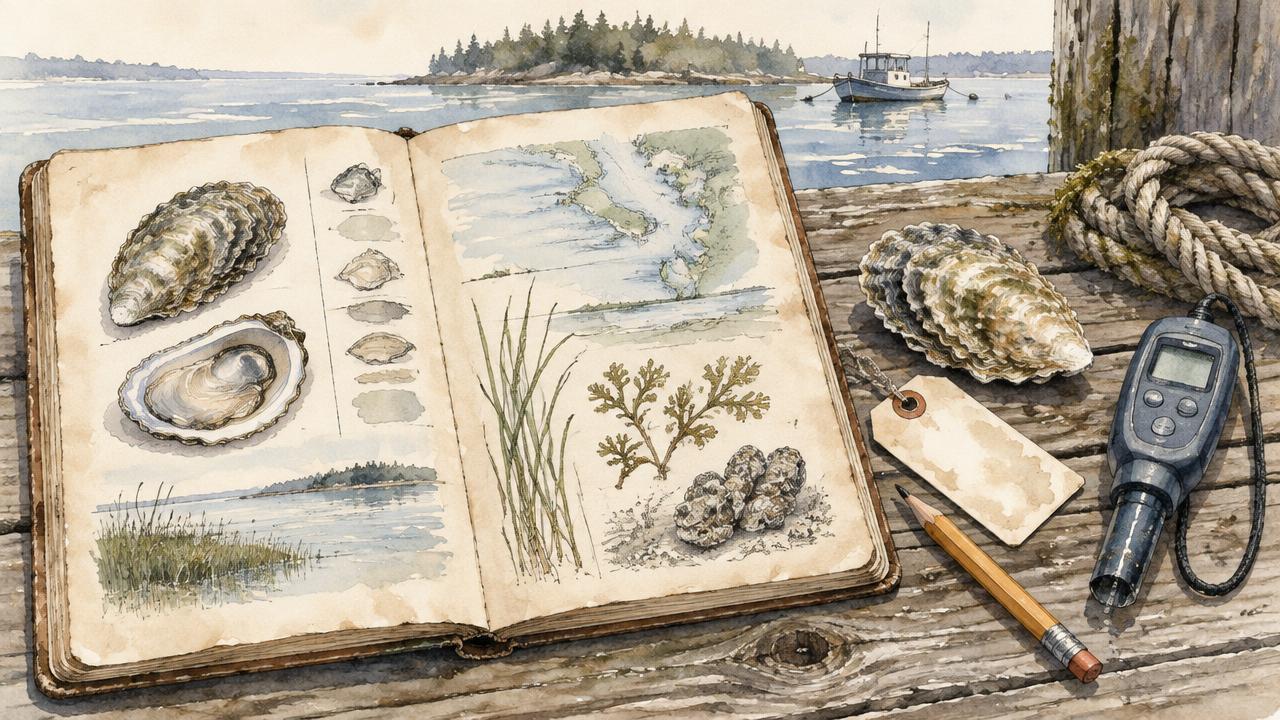
Written in plain language, illustrated, and kept as a reference afterward.
Measured per lesson, with written outcomes, so your time is recorded honestly.
Clear answers and explanations, unlimited tries, and nothing sent to a gradebook.
Rules are shown by state with the source and the date we checked it.

Lesson 1 · 1.5 h

Lesson 2 · 1.5 h
Lesson 3 · 2 h

Lesson 4 · 2 h
Lesson 5 · 1.5 h

Lesson 6 · 1.5 h
We say plainly how well each part of the country is covered, rather than implying the whole country is written to the same depth.
The National Shellfish Sanitation Program sets the model the states adopt, including what a harvest tag carries and how long records are kept. Your state shellfish authority publishes the version that applies to you.
FDA, National Shellfish Sanitation Program · checked 2026-09-19The federal food traceability rule requires additional records for foods on a published list, which includes several shellfish categories. Check the list and the compliance date rather than assuming it does or does not reach you.
FDA, Food Traceability Rule · checked 2026-09-19Once product is processed, the federal seafood HACCP regulation governs the monitoring and verification records that must be kept. It is a different rule set from harvest records, and the two are often confused.
eCFR, 21 CFR Part 123 · checked 2026-09-19Seafood HACCP training, food handler cards, and any state-required grower training are separate courses from recognized providers. This one teaches you to keep records well and tells you which required training applies.
FDA, Fish and Fishery Products Hazards and Controls Guidance · checked 2026-09-19Everyone gets the same lessons, practice work, and knowledge checks. For $60 more you also get one real assignment that Jules reads and grades. You can see exactly how it is judged before you start, you pass at 80 percent, and you can rewrite and send it back as many times as you need. This is optional, and it is still not accredited and carries no continuing education credit.
The assignment
Build the record set one operation would actually keep, and prove it holds up.
For an operation of your choosing, build the records pack: what is recorded, by whom, how often, where it lives, and how long it is kept. Include at least one record required by a regulator and one kept only because it makes the business work. Then run a test: pick a question an inspector or a buyer might ask, and show, step by step, how your records answer it. Cite the rule behind every required record.
How it is graded
The set covers the operation · 25 points
Nothing essential to that operation is missing, and nothing is included that nobody would ever fill in.
Required records tied to their rule · 25 points
Each mandatory record names the regulation or program that requires it, with the date you checked.
Ownership and retention stated · 25 points
Every record has a named role responsible and a retention period.
The test question answered end to end · 25 points
You trace a real question through your records and it comes out answered, with any weak link admitted.
100 points in total. You pass at 80. Jules grades what you worked out, not your formatting or your word count.
Where a rule requires it, take the real training: seafood HACCP from a recognized provider, your state's grower or dealer requirements, and a food handler card. This course teaches the record keeping. It is not one of those certifications.
This course does not carry accreditation, credit, or continuing education units, and completing it does not count toward any outside credential. It is written to the structure a continuing education standard expects, with measured hours, written outcomes, and a completion record you can keep.