
6 full lessons
Written in plain language, illustrated, and kept as a reference afterward.
Working skills · the habits that get everybody home
Cold, tides, vessels, lifting, machinery, chemicals, and clean handling, plus the habits and plans that get everybody home at the end of the day.
Six lessons on the hazards this industry actually produces: cold water and the first minutes, tides and soft ground, lines and loads on a working deck, wet weight and machinery, chemicals next to food, and the plan for the day something goes wrong. Written for the person doing the work, and for whoever is responsible for them.
$75 once, or $75 on Driftline. Add $60 and Jules reads and grades one real piece of work, passing at 80 percent. Review is optional. Nothing here is accredited or carries credit.
Pay once, and it is yours to come back to. Pick how you want to take it.
On your own
The whole class, the practice work, and the knowledge checks. No pass score, no graded work, no certificate gate.
With Jules reading your work
Everything above, plus one real piece of work, "A safety plan for one real day", that Jules reads and grades against a rubric you can see before you start. You pass at 80 percent, and you can rewrite and send it back as many times as you need. This is optional, and it is not accredited and carries no continuing education credit.
Already taking this class? You can add review later and pay only the $60 difference.
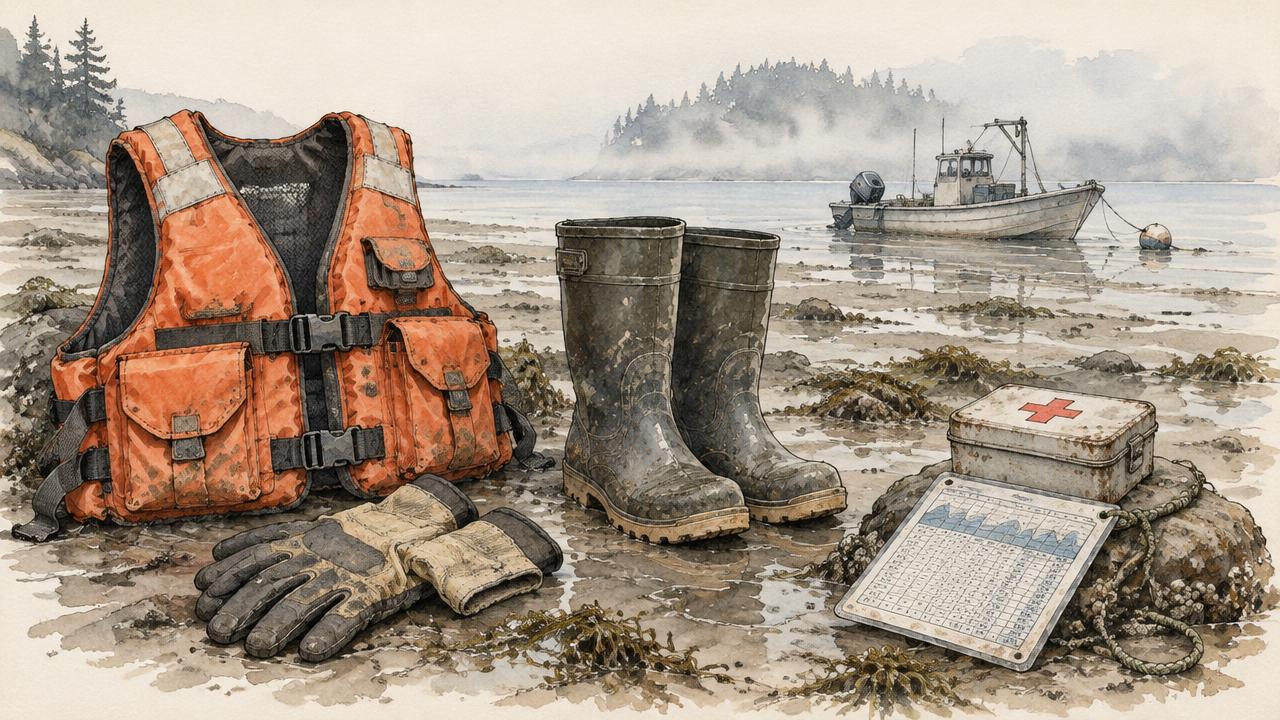
Written in plain language, illustrated, and kept as a reference afterward.
Measured per lesson, with written outcomes, so your time is recorded honestly.
Clear answers and explanations, unlimited tries, and nothing sent to a gradebook.
Rules are shown by state with the source and the date we checked it.

Lesson 1 · 1.5 h

Lesson 2 · 1.5 h
Lesson 3 · 2 h

Lesson 4 · 1.5 h
Lesson 5 · 1.5 h
Lesson 6 · 1 h
We say plainly how well each part of the country is covered, rather than implying the whole country is written to the same depth.
The federal workplace safety agency sets the baseline. Many states run their own approved plan instead, with rules that can be stricter. Find out which one covers your workplace before you rely on anything you read here.
OSHA, state plans · checked 2026-09-19The National Institute for Occupational Safety and Health studies deaths and injuries in commercial fishing, and the findings about falls overboard, deck injuries, and drills apply directly to small working boats on a farm.
NIOSH, commercial fishing safety · checked 2026-09-19Published tide predictions for United States stations are free and official. Predictions are not measurements, and wind and weather can push real water levels above or below them.
NOAA Tides and Currents · checked 2026-09-19Required safety equipment depends on the vessel, its length, and how it is used. The Coast Guard boating safety program publishes the requirements and offers free vessel safety checks in many places.
U.S. Coast Guard boating safety · checked 2026-09-19Everyone gets the same lessons, practice work, and knowledge checks. For $60 more you also get one real assignment that Jules reads and grades. You can see exactly how it is judged before you start, you pass at 80 percent, and you can rewrite and send it back as many times as you need. This is optional, and it is still not accredited and carries no continuing education credit.
The assignment
Write the plan for a working day on the water, from the truck to the dock.
Describe one working day at a site you know or have studied: what gets done, with what gear, by how many people. Then write the safety plan for that day. Cover cold water, tides, lifting, machinery, and the drive. For each hazard say what would actually go wrong, what you do to stop it, and what happens if it goes wrong anyway, including who you call and how long help takes. Name any required training or equipment and cite the rule that requires it.
How it is graded
Hazards drawn from the real day · 25 points
Every hazard you list belongs to the work you described, and you have not padded the list with generic ones.
Controls that people would actually use · 25 points
Your controls fit the crew and the gear, not an ideal site with unlimited budget.
Emergency response with real times · 25 points
Your response names who is called, from where, and how long the wait honestly is.
Requirements cited, not assumed · 25 points
Training and equipment requirements point to the rule or standard that sets them.
100 points in total. You pass at 80. Jules grades what you worked out, not your formatting or your word count.
The last lesson sends you to real hands-on first aid and CPR training, a free vessel safety check, your state's workplace safety plan, and a food handler card where your work requires one. This course points at those. It does not replace any of them.
This course does not carry accreditation, credit, or continuing education units, and completing it does not count toward any outside credential. It is written to the structure a continuing education standard expects, with measured hours, written outcomes, and a completion record you can keep.