6 full lessons
Written in plain language, illustrated, and kept as a reference afterward.
Outdoors and hosting · lead the walk
How to plan, lead, and teach small-group shore tours the way Jules runs hers: safe, legal, welcoming, and honest about what the ocean is doing that day.
Six lessons on running shore tours the way Jules runs hers: reading the tide tables and marine forecast before guests do, knowing the collection rules for your exact shore, foraging seaweed legally and lightly, leading a group safely on slippery rocks, teaching at the waterline without lecturing, and the permits, insurance, and pricing underneath it all.
6 lessons · about 12 contact hours
$95 once, or $95 on Driftline. Add $60 and Jules reads and grades one real piece of work, passing at 80 percent. Review is optional. Nothing here is accredited or carries credit.
Pay once, and it is yours to come back to. Pick how you want to take it.
On your own
The whole class, the practice work, and the knowledge checks. No pass score, no graded work, no certificate gate.
With Jules reading your work
Everything above, plus one real piece of work, "A complete tour plan for a real shore", that Jules reads and grades against a rubric you can see before you start. You pass at 80 percent, and you can rewrite and send it back as many times as you need. This is optional, and it is not accredited and carries no continuing education credit.
Already taking this class? You can add review later and pay only the $60 difference.
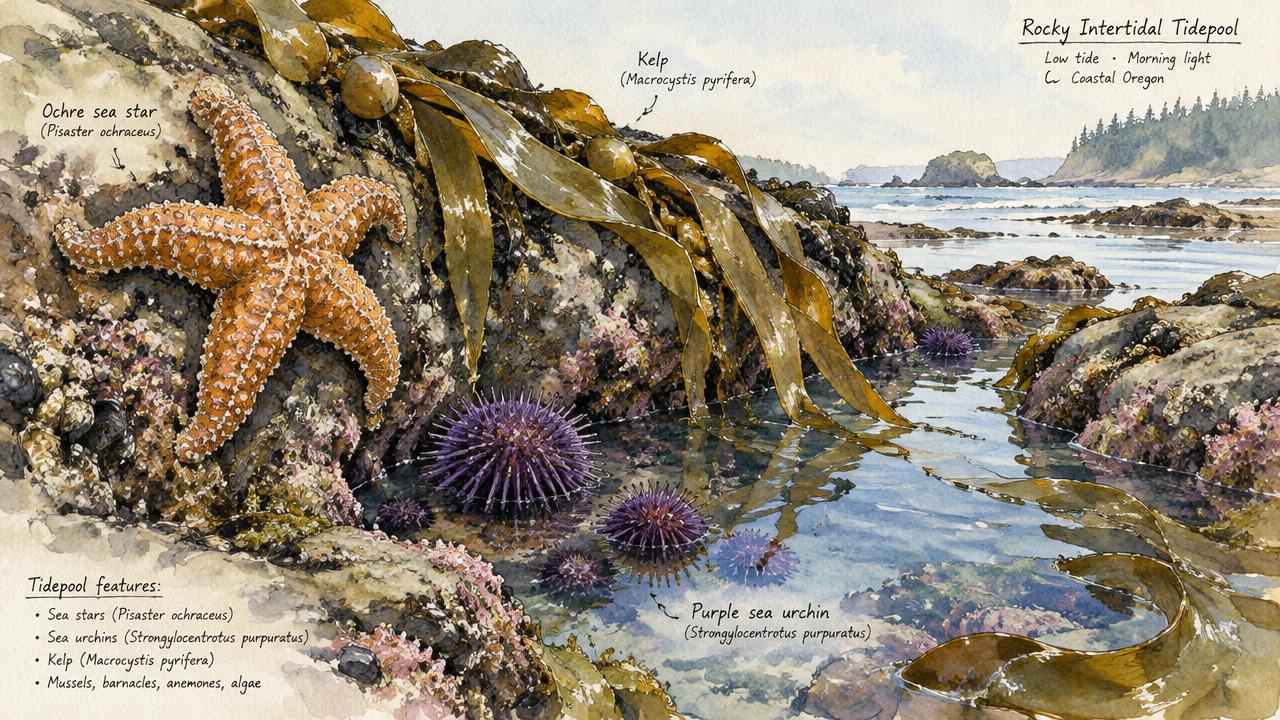
Written in plain language, illustrated, and kept as a reference afterward.
Measured per lesson, with written outcomes, so your time is recorded honestly.
Clear answers and explanations, unlimited tries, and nothing sent to a gradebook.
Rules are shown by state with the source and the date we checked it.

Lesson 1 · 2 h

Lesson 2 · 2 h
Lesson 3 · 2 h

Lesson 4 · 2.5 h

Lesson 5 · 2 h
Lesson 6 · 1.5 h
We say plainly how well each part of the country is covered, rather than implying the whole country is written to the same depth.
Alaska Fish and Game posts personal use harvest rules for aquatic plants area by area, so the answer in Southeast is not the answer everywhere.
Alaska Department of Fish and Game, Personal Use Aquatic Plants, Southeast · checked 2026-10-02Guiding, gathering, or filming commercially on state park land in Alaska takes a park permit, separate from any fishing or harvest rule.
Alaska Department of Natural Resources, Alaska State Park Permits · checked 2026-10-02Maine publishes its rockweed rules under commercial fisheries, including where harvest is closed. Ownership of intertidal rockweed has also been litigated there, so landowner permission matters.
Maine Department of Marine Resources, Rockweed · checked 2026-10-02Texas publishes general fishing regulations covering fish, mussels, clams, and other aquatic life, and each Gulf state posts its own size and bag limits. Read your own state's current page each season.
Texas Parks and Wildlife Department, General Fishing Regulations · checked 2026-10-02Everyone gets the same lessons, practice work, and knowledge checks. For $60 more you also get one real assignment that Jules reads and grades. You can see exactly how it is judged before you start, you pass at 80 percent, and you can rewrite and send it back as many times as you need. This is optional, and it is still not accredited and carries no continuing education credit.
The assignment
Plan one full tour on a shore you can reach, from forecast to waiver.
Choose a real shore you could guide. Pull the tide prediction and marine forecast for a date you pick, and state your cancel threshold. Write the collection and harvest rules for that exact shore with the agency sources you checked, including any protected areas and protected species. Write your full pre-walk safety briefing. Describe your group size, your accessibility plan, and your teaching arc with the five species you would teach. Finish with the business page: who manages the shore and what commercial guiding requires there, your insurance and waiver approach, your price, and your weather-cancellation policy.
How it is graded
The day is chosen on evidence · 25 points
Tide prediction and marine forecast are cited for a real date, and the cancel threshold is stated plainly.
The rules are right for that shore · 25 points
Collection and harvest rules match the agencies that manage that shore, with sources named and checked dates given.
Safety and teaching are planned, not improvised · 25 points
The briefing, group size, accessibility plan, and teaching arc are all written out.
The business side is honest · 25 points
Managing agency, permit needs, insurance, waiver, price, and cancellation policy are each addressed without hand-waving.
100 points in total. You pass at 80. Jules grades what you worked out, not your formatting or your word count.
Start with the naturalist class if the practice itself is new to you. Seaweed 101 and the field identification class sharpen what you can teach.
This course does not carry accreditation, credit, or continuing education units, and completing it does not count toward any outside credential. It is written to the structure a continuing education standard expects, with measured hours, written outcomes, and a completion record you can keep.