

Lessons that stay current
All 19 modules, written from a working farm's point of view and updated as California rules and markets shift. Your access includes every update.
The school · the full business course

Flagship course · Self-paced online · Enroll any time
Everything it takes to plan, permit, fund, and actually run an aquaculture business on the California coast.
Who it's for: Working growers, career changers, and college students who want the business half of aquaculture, not just the biology.
Already enrolled? Head to your dashboard or open your classroom.
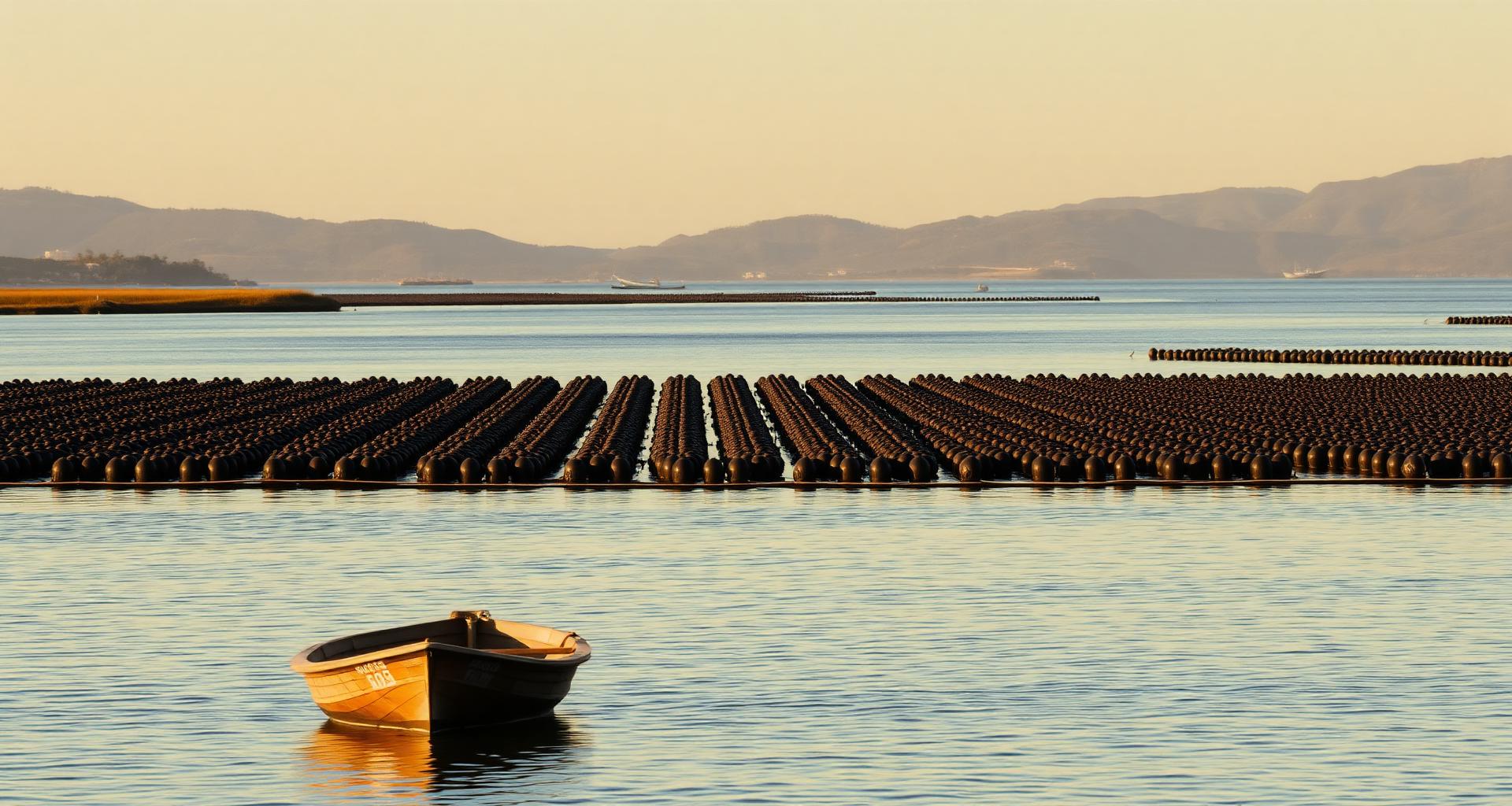
All 19 modules, written from a working farm's point of view and updated as California rules and markets shift. Your access includes every update.
Permit paths, leases, licenses, insurance, labor, and food safety, laid out agency by agency, in the order they actually happen.
Budgets, cash flow, pricing, and feasibility modeling, including enterprise budgets built from rates measured on a working California seaweed farm. Full Send and above hand you the editable spreadsheets, and the budget labs run the same math in your browser at any level.
Checkpoint exams at 80% to pass, major writing assignments read by Jules within a week, and a completion record when it all clears.
19 modules, 50+ contact hours, each one paired with real work you can put in front of a lender, a landlord, or a regulator.
Module 01 · 3 hrs
How farm models (shellfish, finfish, seaweed, land based recirculating) drive the site you need, and how site constraints quietly decide the business model for you.
→ Activity 1: Site scoring matrix
Module 02 · 3 hrs
The federal, state, and local permit path in plain order, who signs what, and where applications actually stall.
→ Activity 2: Permit path map
Module 03 · 3 hrs
Gear, buildout sequence, stocking and harvest cycles, and building a production calendar that survives contact with weather.
→ Activity 3: Production calendar
Module 04 · 3 hrs
Worker safety obligations, food safety controls, sanitation, recordkeeping, and what an inspection day looks like.
→ Quiz 1 plus safety brief drafting
Module 05 · 3 hrs
What social license is, how it is earned, how it is lost, and what it costs to rebuild.
→ Activity 4: Community engagement plan
Module 06 · 3 hrs
Work out who cares, who holds real power, and who is simply loud, then decide who to talk to first.
→ Activity 5: Stakeholder map
Module 07 · 3 hrs
How to hear what is underneath an objection, choose useful evidence, plan what you can offer, and write a calm response on your own.
→ Project 2: Individual social license response plan
Module 08 · 3 hrs
Real impact categories, monitoring you can afford, certification pathways, and planning for a coastline that is changing.
→ Quiz 2 plus monitoring plan draft
Module 09 · 3 hrs
Product form, grading, story, naming, and the messaging that survives a skeptical buyer.
→ Activity 6: Product and messaging sheet
Module 10 · 3 hrs
Channels from dock sales to distribution, pricing conversations, terms, and building a pipeline that is not one restaurant.
→ Activity 7: Pitch to a buyer
Module 11 · 3 hrs
Operating budgets, cash flow timing, break even, and the workbook that carries into the capstone.
→ Budget and pricing workbook
Module 12 · 3 hrs
Sole proprietor through cooperative and LLC, liability, taxes, and the grant and lending landscape that funds coastal operations.
→ Capstone business plan, part one
Module 13 · 3 hrs
Building a unit cost model from inputs, labor, mortality, and overhead, then stress testing it.
→ Unit cost workbook
Module 14 · 2 hrs
Turning the permit map from module 2 into a funded, scheduled line item with contingency.
→ Permit cost and schedule sheet
Module 15 · 2 hrs
Grant programs, working capital, equipment finance, and matching the money to the stage.
→ Funding stack worksheet
Module 16 · 2 hrs
Market structure, buyer types, seasonality, contracts, and payment behavior.
→ Buyer research brief
Module 17 · 2 hrs
Risk register, mitigation, coverage types, and what is genuinely uninsurable.
→ Risk register
Module 18 · 2 hrs
Roles, wages, classification, training, scheduling around tides, and retention on a small crew.
→ Hiring packet draft
Module 19 · 2 hrs
Production, sales, compliance, and financial records, and the system that keeps them without a full time admin.
→ Capstone business plan, final assembly
Same course, different depth. Pick the one that matches what you're trying to do with it — full details and payment plans live on the tuition page.
Dip a toe in.
$95Driftline $44
Most popular
The full course, with standards-based review and a certificate.
$225Driftline $111
Course + the whole business toolkit.
$500Driftline $333
Teach the tide yourself.
$1,111Driftline $666
Your hours, counted and kept
This course is 19 modules and 51 hours of real, counted class time. In the continuing education world, ten hours of class time is called one CEU, so this course works out to 5.1 CEU. Your hours, quiz scores, and finished work are all kept in a permanent record, and your certificate has a code anyone can use to check that it is real.
The course is built to match a well known national standard for continuing education, called the ANSI/IACET Standard. We have not applied for accreditation yet, and we plan to in 2027. Until that is official, your certificate stands on its own: proof of real hours and real work that an employer or agency can check for themselves.
One note: the counted hours and CEU come with the certificate tiers (Brackish, Full Send, and Faculty Pass). Tidepool is learn-at-your-own-pace, with no reviewed work and no certificate. Read the full academic policies →
Step 1
Choose a depth and pay once or split it into 2 or 4 auto-payments.
Step 2
Checkout hands you straight back here to set up your login.
Step 3
Your tier gets matched to your materials and you'll get a hello from Jules.
Step 4
Once your room is open, all 19 modules unlock and you set the pace.
Curious who's teaching? Meet Jules.
Your hours, counted and kept
This course is 19 modules and 51 hours of real, counted class time. In the continuing education world, ten hours of class time is called one CEU, so this course works out to 5.1 CEU. Your hours, quiz scores, and finished work are all kept in a permanent record, and your certificate has a code anyone can use to check that it is real.
The course is built to match a well known national standard for continuing education, called the ANSI/IACET Standard. We have not applied for accreditation yet, and we plan to in 2027. Until that is official, your certificate stands on its own: proof of real hours and real work that an employer or agency can check for themselves.
One note: the counted hours and CEU come with the certificate tiers (Brackish, Full Send, and Faculty Pass). Tidepool is learn-at-your-own-pace, with no reviewed work and no certificate. Read the full academic policies →
Every purchase is licensed to one person and covered by our course terms and privacy page.